
Hawkridge Entertainment Services
Hawkridge Entertainment Services is a Sydney based Australian consultancy that helps councils, state agencies and developers decide whether, how and at what scale to build, run or reform theatres, arts centres, entertainment venues and stadia. We prepare feasibility studies, business cases, demand and financial models, operating models and economic impact assessments. Our work is led by Tim Long, CVE, who has managed council venues and stadia, and took The Concourse, Chatswood, from business case through design to its opening in 2011.
RECENT PROJECTS
A selection of our recent work for councils, state agencies and developers, from community halls and arts centres to stadia. See all projects


QIC Castle Towers (The Village)


Leo Kelly Blacktown Arts Centre Redevelopment


Warrawong Parklands Commercial & Tourism Assessment


Moreton Bay Strategic Assessment & Options Analysis


Stage Queensland


RITAM (Sacred Firebird) – Minerva Theatre
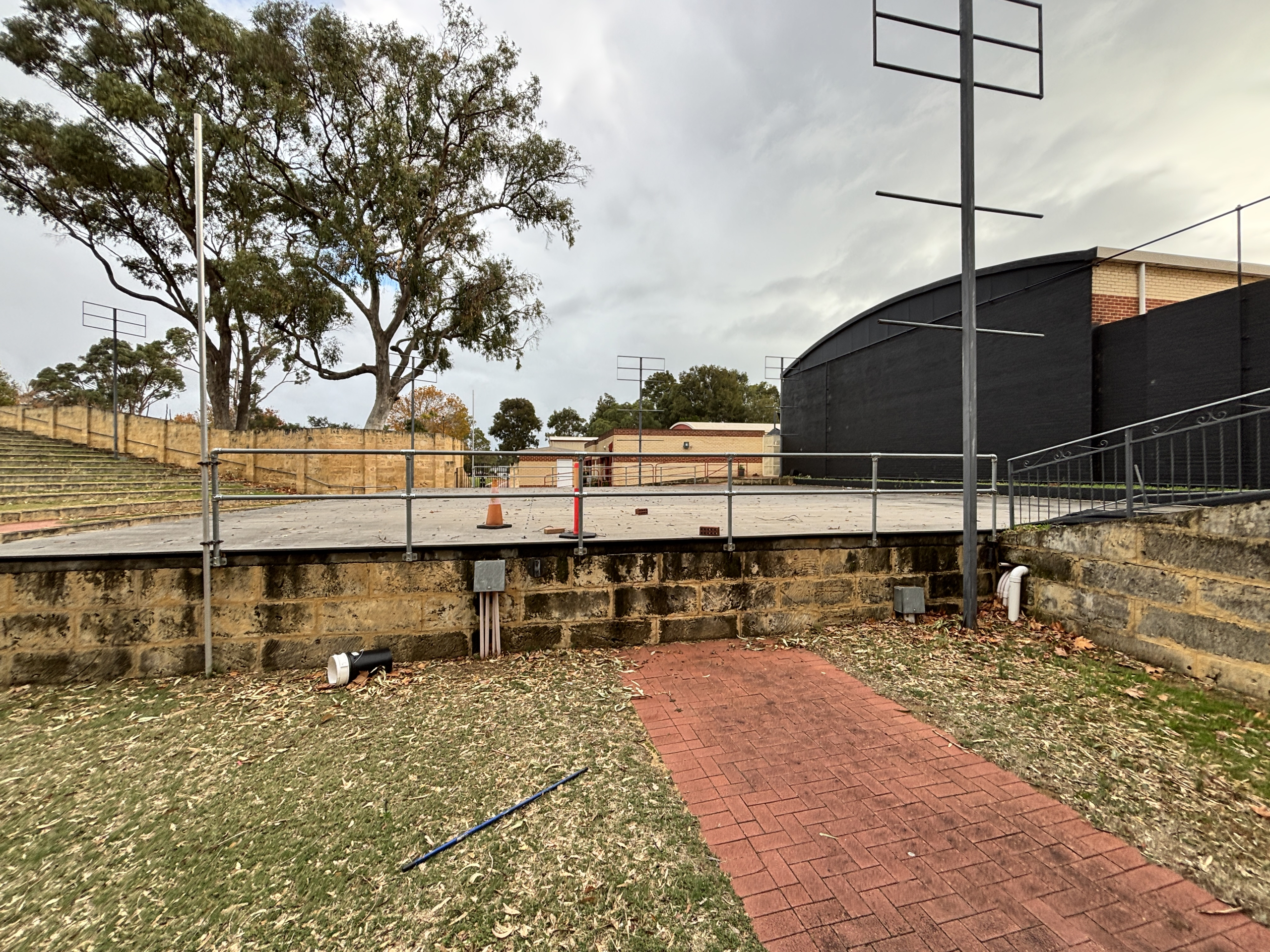
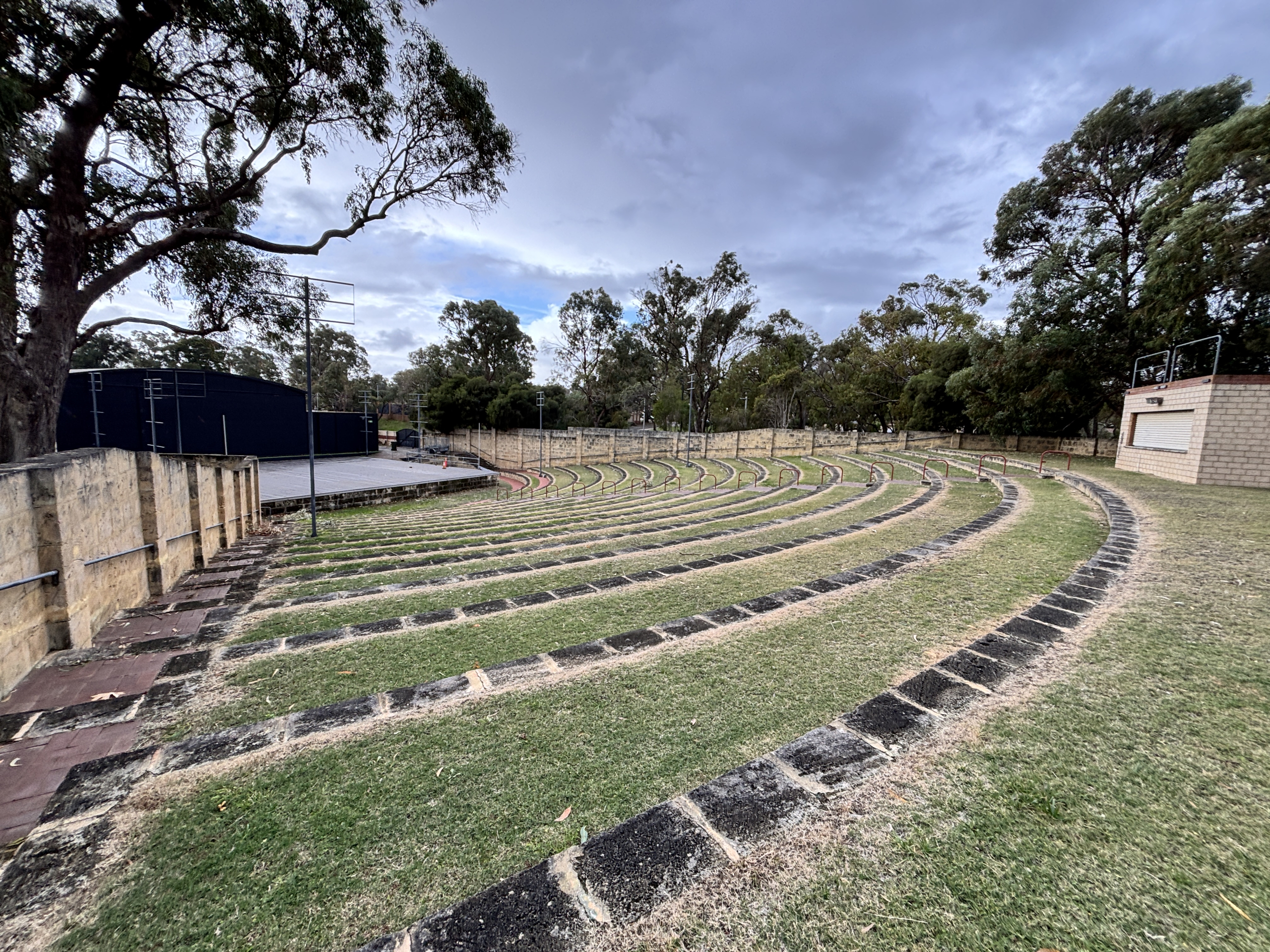
Future use assessment of Koorliny Amphitheatre
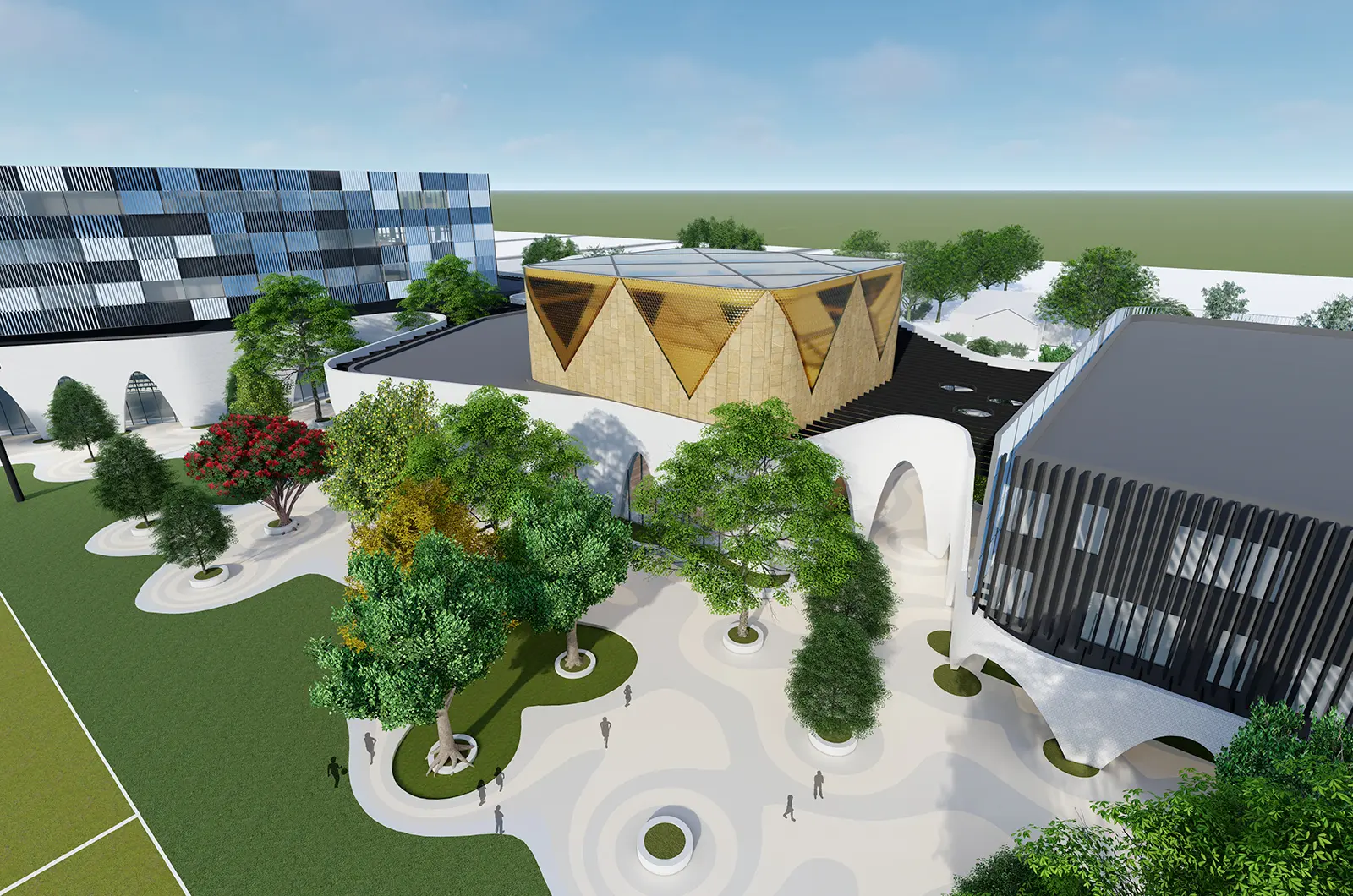
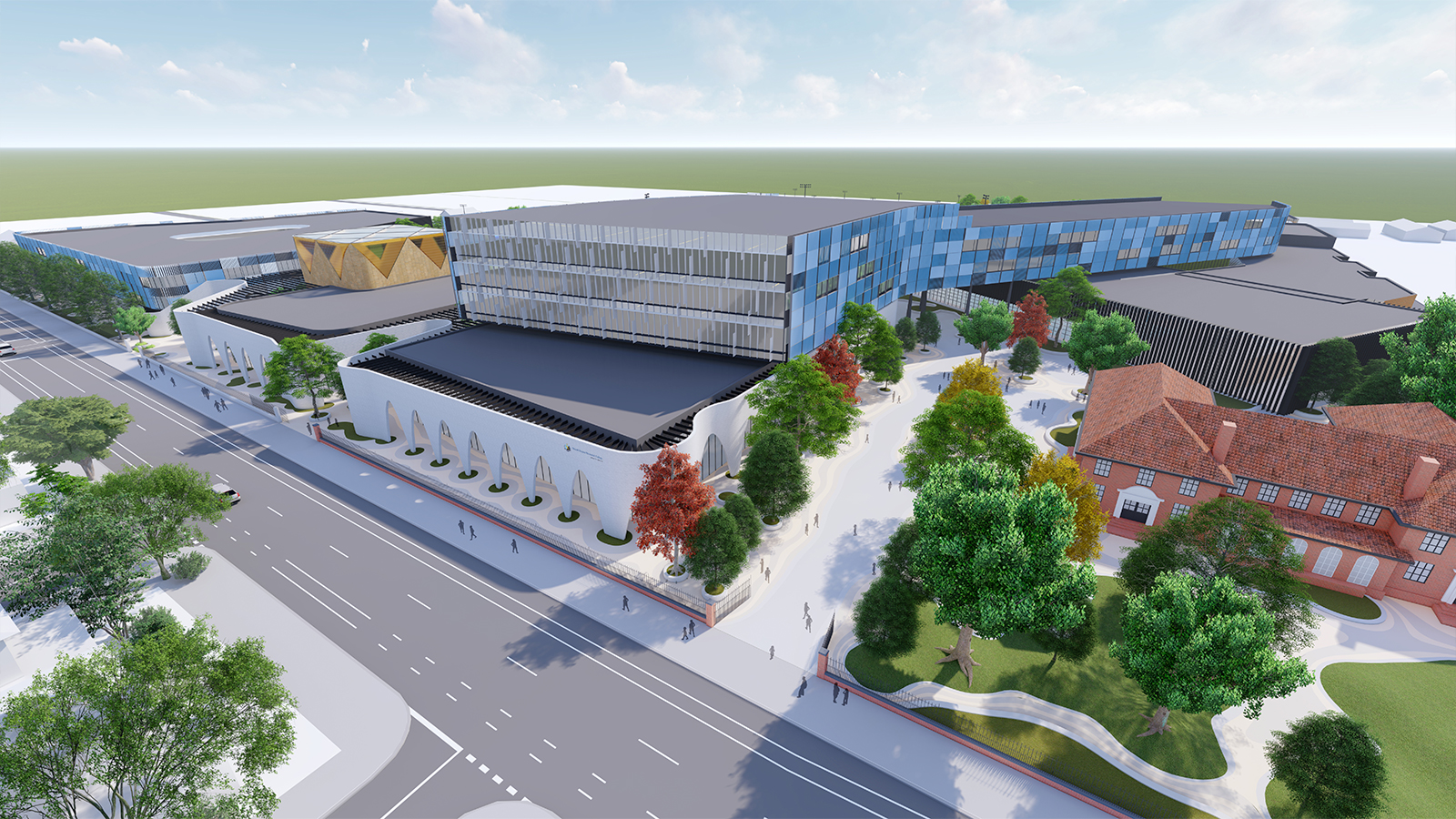
Project Generation Performing Arts Centre


Cronulla Special Entertainment Precinct (SEP)


Economic Impact presentations for CircuitWest WA Showcase


Brisbane Arena – Design Brief Peer Review (Operational)


Nabatean Theatre entertainment & events complex
Councils and agencies we have worked with
City of Parramatta · Campbelltown City Council · Wingecarribee Shire Council · Sutherland Shire Council · Blacktown City Council · Devonport City Council · Waverley Council · Coffs Harbour City Council · Broken Hill City Council · Latrobe City Council · City of Moreton Bay · City of Kwinana · NSW Department of Planning, Housing & Infrastructure · Create NSW · Stage Queensland · CircuitWest · Sydney Fringe Festival · Sydney Comedy Festival
Demand, utilisation and financial modelling that tests whether a venue will be used, what it will cost to build and run, and which option the evidence supports.
Cultural infrastructure strategies and plans that set out what a region needs, in what order and at what scale.
Operating models and operational reviews for existing venues, including governance, staffing, programming and hire.
Functional briefs, area schedules and design review from an operator’s point of view, so the building works on opening night and for decades after.
Audience studies, audience engagement, stakeholder engagement and workshops that show who attends a venue, who does not and why, so programming and investment decisions start from the community the venue serves.
Economic and social impact assessments for venues, festivals and precincts.
How much does it cost to build a theatre?
It depends. Cost is not simply a matter of the number of seats; many factors shape what a theatre costs and how well it works. Try the Hawkridge Entertainment Services theatre cost calculator for an early indication of what your project may cost.
Advice from people who have run council venues
A Sydney based Australian consultancy for cultural infrastructure, venues and the arts.

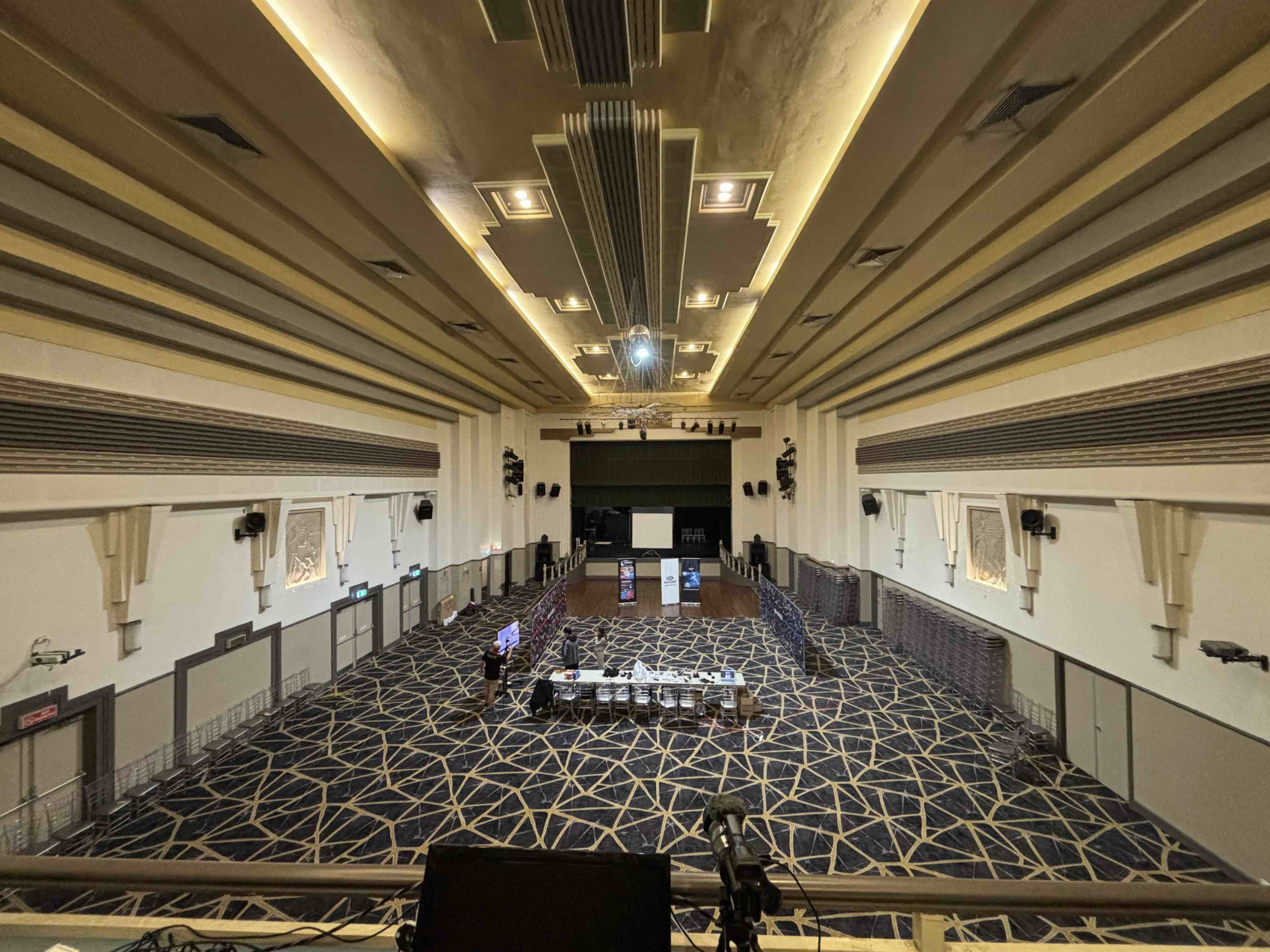
Tim Long established Hawkridge Entertainment Services in 2014 after a career spent inside venues: as a performer, as a manager of council concert halls and theatres, and running stadium operations. While managing council venues he wrote the business case for The Concourse, Chatswood, and helped shape its design through to opening in 2011. Running venues while designing a new one is why our demand and financial modelling reflects what a venue can actually achieve, not only what a spreadsheet will accept.
Since then we have advised councils, state agencies and developers across Australia and internationally, on projects from community halls and arts centres to stadia. Every recommendation states what the venue will cost to operate and what has to be true for it to work, so the decision stays with the client and the conditions are clear.
Common questions
A theatre feasibility study tests whether a proposed venue will be used enough to justify building it, what it will cost to build and to operate each year, and which size, configuration and operating model the evidence supports. We start with demand: the product (touring shows, local hirers and events) the venue can realistically attract and how often. That utilisation estimate drives the financial model, and the financial model drives the operating model.
A new theatre should be as large as its market can fill, and no larger. A venue needs enough product (shows, artists and performances) to be used throughout the year, and empty seats still cost money to build, staff and maintain. We size venues from the demand evidence, and where a region cannot support a large house we say so and set out the scalable options.
Some council venues can return an operating surplus under the right conditions, and most public venues operate with some level of subsidy from their owner. The result depends on the levers the venue controls: ticketing, food and beverage, technical and production charges, hire terms and partnerships, as well as the hire fee. Raising the hire fee alone usually falls on community users without lifting overall revenue. Our advice states what would have to be true for each result.
A new cultural venue commonly takes between five and nine and a half years from the first strategic work to opening. Pre-design (masterplan, strategic assessment, feasibility, business case and capital expenditure review) typically takes 24 to 48 months, and design, approvals and construction a further 36 to 66 months, followed by handover and a defects period of about a year. The Concourse, Chatswood, ran from business case in 2003 to opening in 2011.
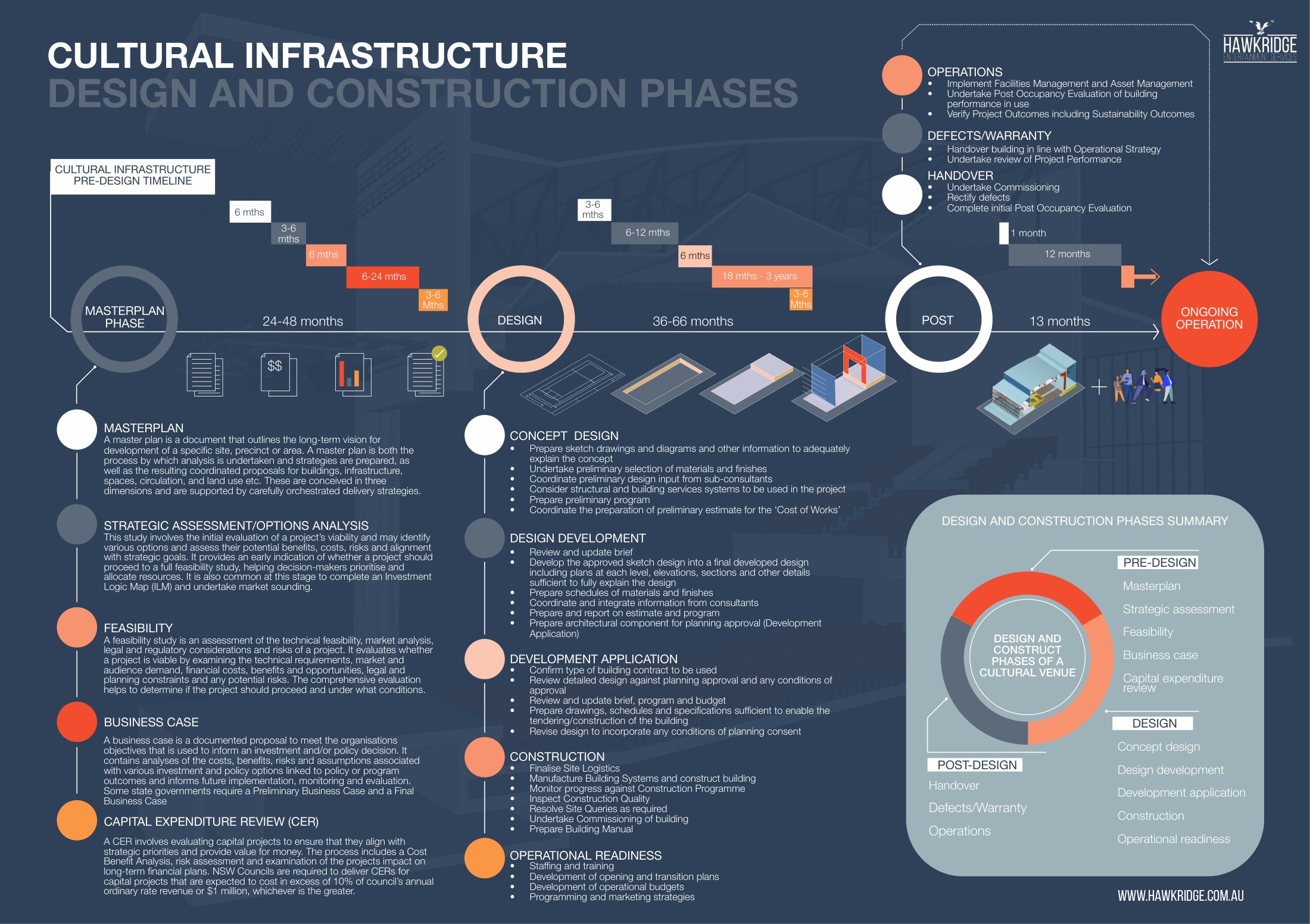
Cultural infrastructure design and construction phases, from masterplan to ongoing operation. Select the image to enlarge.
A council should first identify the community need, then decide what role it should play in meeting it: do nothing, advocate, facilitate or broker, or provide the service directly. Only where Council decides to provide does the question turn to facilities, and a new building is one of five options alongside better using, expanding or rationalising existing facilities, or using facilities Council does not own. We recommend a new venue where the conditions are right, and a need that existing assets cannot meet is only one of those conditions: there must also be enough demand to use it, funding to build it and an owner able to carry its operating cost.
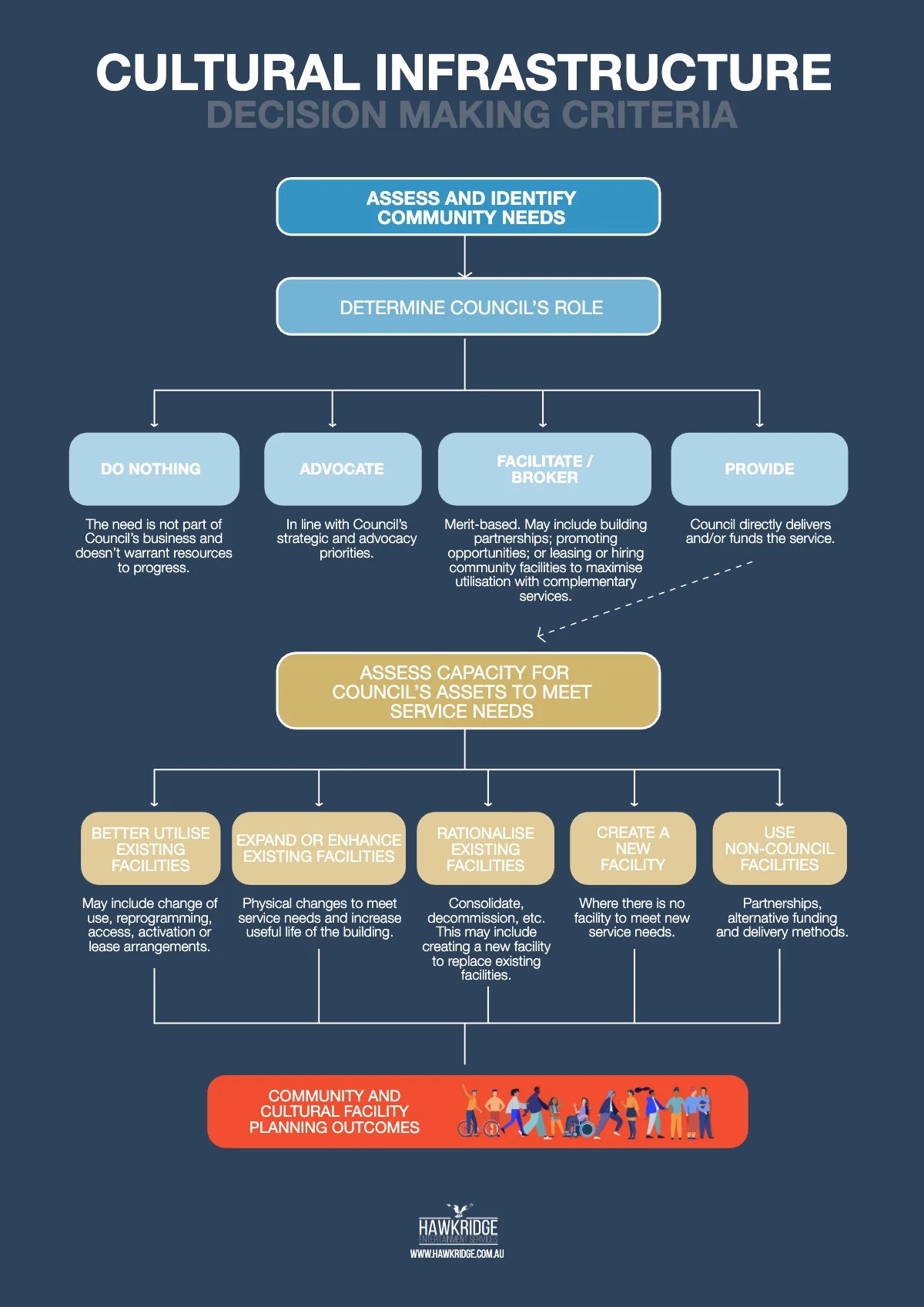
Cultural infrastructure decision-making criteria for councils. Select the image to enlarge.
We have run venues as well as planned them. Tim Long has managed council venues and stadium operations and took The Concourse, Chatswood, from business case to opening, so our demand and financial modelling draws on operating experience rather than publicly available data alone.
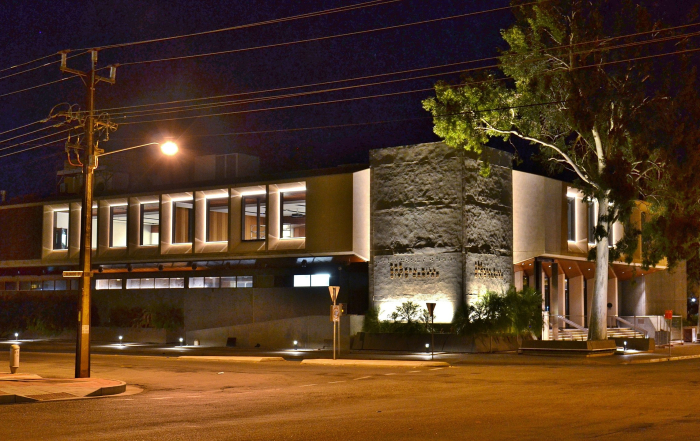
What keeps people in Broken Hill? Why a 700-seat civic venue is part of the answer
New research on why people stay in Broken Hill points to liveability, connectivity and "scenius". We look at what it means for regional civic venues like the Broken Hill Civic Centre.
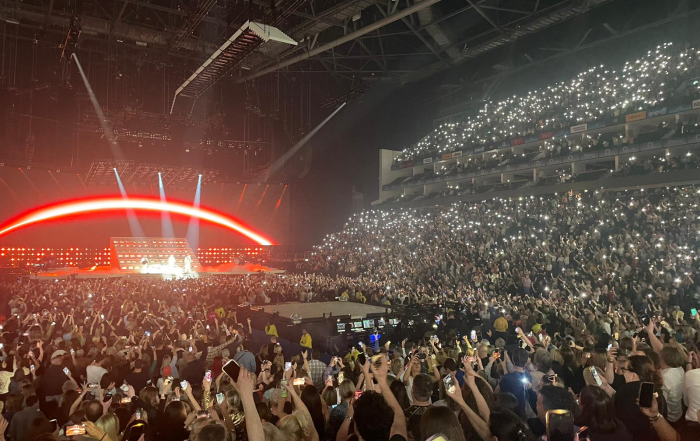
Beyond the Event: What CVE Leadership Looks Like Today
Tim Long, CVE, writes in IAVM's Venue Professional on how venue leadership now extends beyond the event, with insights from Te Pae Christchurch and HBF Park.
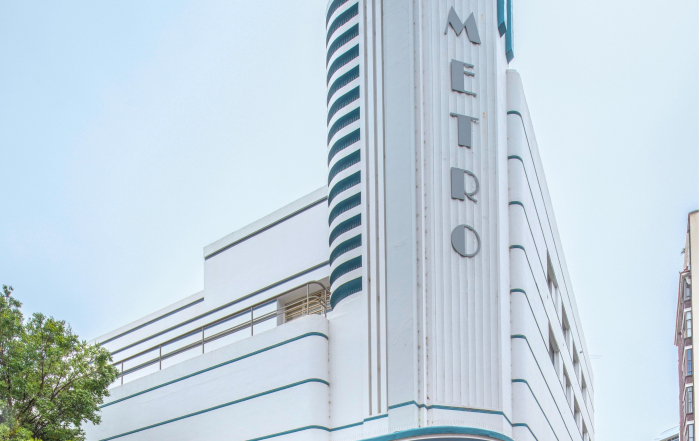
Minerva Theatre set for revival
Gretel Packer's Sacred Firebird will restore Potts Point's 1939 Metro-Minerva Theatre as a 900 to 1,000 seat venue. Hawkridge on what it will take.
Prequalified with NSW Government to provide services for Government and Business Strategy including:
Prequalified for Financial Management and Consulting Services in Queensland and Northern Territory (LB310) and Tasmania (LB309)
Infrastructure NSW – Expert Review Panel Member for major projects
Infrastructure SA – Expert reviewer for major projects
QLD Treasury – Expert reviewer for major projects
Hawkridge Entertainment Services are proud members of PAC Australia and the Association for Cultural Economics International (ACEI).
A venue has to be operationally viable and commercially realistic, and it has to serve its community for decades after opening night. That is the test we apply to every recommendation.